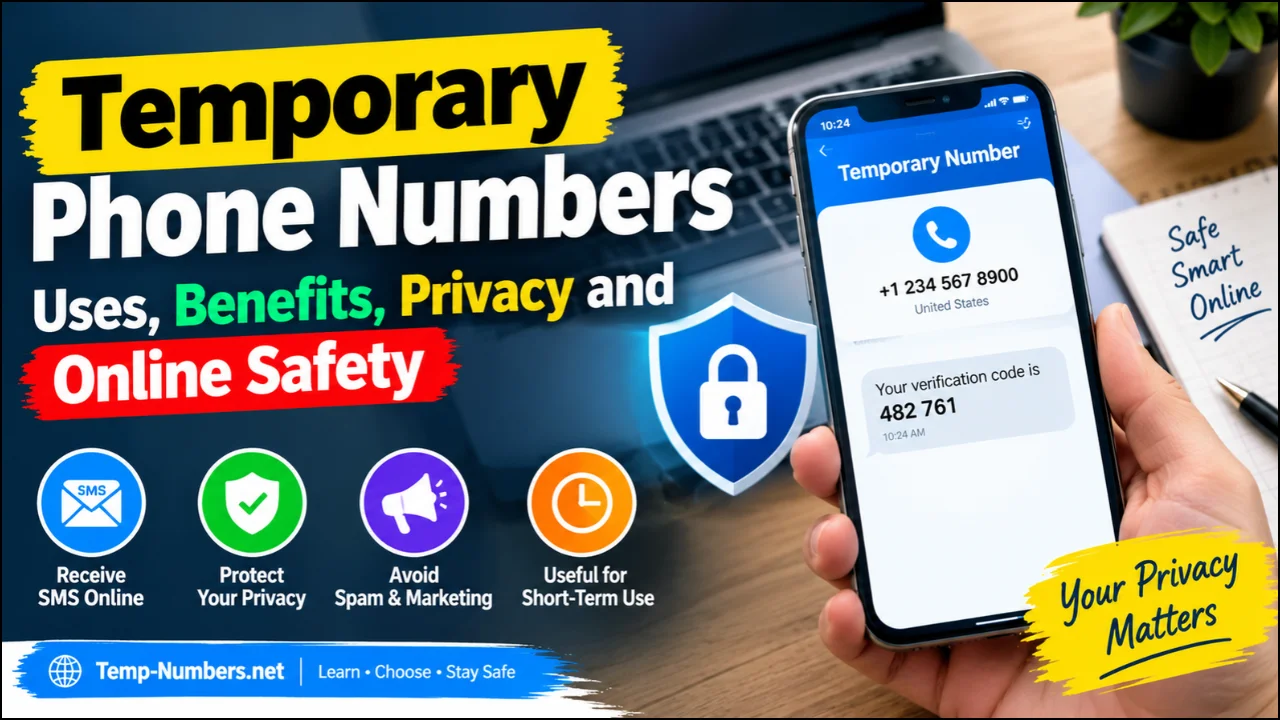
Online services have become part of everyday life. From creating social media accounts to signing up for shopping websites, many platforms ask users to provide a phone number for verification. Although this process helps confirm account access, it can also expose personal numbers to unwanted promotional messages, spam calls and potential privacy risks.
Temporary phone numbers offer an alternative for certain non-sensitive online activities. They allow users to receive SMS messages and verification codes without immediately sharing their primary mobile number. However, these services also have limitations, and understanding how they work is essential before using them.
For readers who want to learn more about online SMS verification, Temp Numbers provides information about temporary phone numbers and receiving SMS messages online. Before using any such service, users should check whether messages are publicly accessible and avoid using shared numbers for sensitive accounts.
In this guide, we will explain what temporary phone numbers are, how they work, their common applications and the precautions users should take to protect their personal information online.
What Is a Temporary Phone Number?
A temporary phone number is a virtual or disposable number designed for short-term communication or SMS verification. Depending on the service, users may be able to access incoming text messages through a website instead of receiving them on their personal mobile phones.
These numbers can be useful when a website requires SMS verification for a one-time registration or a temporary online activity. They may also help users avoid sharing their primary number with unfamiliar platforms.
Some services provide temporary numbers without requiring account registration. Availability, supported countries and compatibility with third-party platforms can vary.
How Do Temporary Phone Numbers Work?
Most online temporary number services follow a simple process. Users select an available number, enter it on a supported website that requires verification, and check the corresponding inbox for an incoming SMS message.
The general process includes the following steps:
- Choose a country: Select an available country based on the requirements of the service you want to use.
- Select a number: Choose an available temporary number from the displayed list.
- Enter the number: Use it on a website that permits virtual or temporary numbers.
- Check incoming messages: Open the relevant inbox to see whether the verification message has arrived.
- Follow security precautions: Avoid sharing sensitive information through a public inbox and never use shared numbers for important accounts.
For business applications, developers should use authorised testing numbers or official sandbox environments whenever possible. This helps improve reliability and prevents confidential verification messages from being exposed.
Common Uses of Temporary Phone Numbers
Temporary numbers can be helpful in several everyday situations, particularly when an activity does not require a permanent personal phone number.
1. Testing Online Services
Developers, website owners and digital professionals sometimes need to test registration forms, SMS workflows and account verification features. Temporary numbers may help with basic testing when the platform permits their use.
For more advanced testing, dedicated test numbers or official testing environments are preferable because they provide greater control and reliability.
2. Reducing Unwanted Marketing Messages
Some websites request a phone number during registration and may subsequently send promotional messages. Using a temporary number for an eligible, non-sensitive activity may reduce the exposure of a personal number.
However, it is not a complete privacy solution. Users should also review marketing consent options and the privacy policies of the websites they visit.
3. Exploring New Websites and Applications
People often try new applications, online communities and digital tools before deciding whether to use them regularly. A temporary number may be suitable for an initial verification step if the platform allows it.
Users should remember that some services prohibit temporary numbers or may reject them automatically. Always follow the platform’s registration rules.
4. Learning About SMS Verification
Temporary SMS services can help users understand how verification messages are delivered and displayed. They may also be useful for demonstrations or testing when no sensitive account information is involved.
For business applications, professional developers should use authorised testing tools rather than relying on public inboxes for production systems.
Benefits of Temporary Phone Numbers
The usefulness of a temporary number depends on the intended activity and the type of service providing it.
Better Control Over Personal Number Sharing
Using a separate number for an eligible activity can help limit how often a primary mobile number is shared with online platforms. This may reduce some unwanted contact, although it cannot prevent every form of tracking or data collection.
Convenient Online Access
Web-based services can allow users to view incoming SMS messages directly through a browser. Depending on the provider, this may eliminate the need to install an additional application or create an account.
Support for Short-Term Activities
A temporary number may be suitable for a brief verification task that does not require future account recovery or long-term communication.
Useful for Basic Testing
Temporary numbers may support simple demonstrations and low-risk testing. Businesses that need repeatable results should use dedicated numbers or official sandbox environments.
Important Privacy and Security Risks
Although temporary numbers have practical uses, they should not automatically be considered private or secure.
Public Messages May Be Visible to Other People
Some free temporary number websites use shared inboxes. Messages received through these numbers may be visible to anyone who opens the same number’s inbox.
This means that an incoming verification code should not be treated as confidential merely because it arrives through a temporary number.
Numbers May Be Reused
A temporary number may be assigned to another user later. If an account remains linked to that number, another person could potentially receive future verification or account recovery messages.
For this reason, temporary numbers should not be used for accounts that must remain accessible over a long period.
Some Platforms Reject Temporary Numbers
Banking services, payment providers and other platforms may block virtual or shared numbers. A temporary number is not guaranteed to work with every website or application.
Users should not attempt to bypass security checks or platform restrictions.
Temporary Numbers Do Not Guarantee Anonymity
Websites may still collect IP addresses, browser information, cookies and other technical data. A temporary number alone does not make online activity anonymous.
Good digital privacy requires a combination of careful data sharing, strong authentication and responsible account management.
Best Practices for Using Temporary Numbers Safely
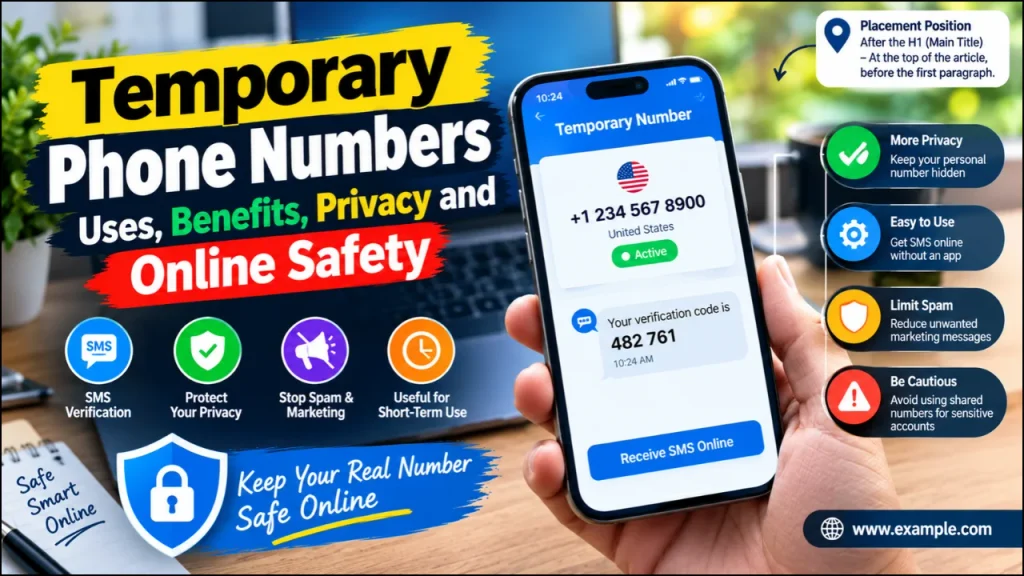
Before using a temporary number, consider the following precautions:
- Avoid sensitive accounts: Never use a public temporary number for banking, payment services, government portals or your primary email account.
- Protect account recovery: Use a secure, long-term number or another supported recovery method for important accounts.
- Check inbox visibility: Determine whether incoming messages are private or publicly accessible.
- Review website policies: Read the terms and privacy information of both the number provider and the platform requiring verification.
- Use strong authentication: Enable an appropriate second authentication factor wherever possible.
- Follow platform rules: Do not use temporary numbers to impersonate others, create abusive accounts or evade legitimate restrictions.
- Do not share verification codes: Never disclose authentication codes, passwords or recovery information to strangers.
These simple precautions can help users make more informed decisions about online registration and personal data.
Temporary Phone Numbers vs Regular Phone Numbers
The main difference between a temporary number and a regular mobile number is the intended duration of use, control and privacy.
| Feature | Temporary Phone Number | Regular Phone Number |
|---|---|---|
| Intended use | Short-term or limited activities | Ongoing communication |
| Number control | May be shared or reassigned | Usually controlled through an individual SIM or account |
| SMS privacy | Depends on the provider; public inboxes may expose messages | Generally more suitable for personal messages when properly secured |
| Account recovery | Often unreliable | Usually more suitable for long-term recovery |
| Suitable for banking | Not recommended for public temporary numbers | May be suitable when supported by the bank |
| Long-term access | Not guaranteed | Usually more reliable while the service remains active |
The right option depends on the situation. A temporary number may be convenient for a low-risk task, while a personal number or dedicated private line is generally a better choice for important accounts.
How to Choose a Temporary Number Service
If you decide to use a temporary number, evaluate the service carefully instead of selecting a number based only on convenience.
Country availability: Check whether the service offers numbers from the country required by the platform.
Message delivery: Understand that SMS delivery times and success rates can vary.
Privacy information: Confirm whether messages are shared publicly and how long they remain accessible.
Clear limitations: A reliable service should explain that certain platforms may reject temporary numbers.
Terms of service: Make sure the intended use complies with the provider’s rules and applicable laws.
Account security: Avoid any service that encourages users to share confidential codes or rely on public numbers for sensitive accounts.
Taking a few minutes to evaluate these factors can help prevent unnecessary security problems later.
Frequently Asked Questions
1. What is a temporary phone number used for?
A temporary phone number may be used for short-term SMS verification, basic testing and eligible online registrations where the platform accepts virtual numbers.
2. Are temporary phone numbers free?
Some services provide free temporary numbers, while others charge fees for private numbers or additional features. Availability and pricing depend on the provider.
3. Can I receive OTPs using a temporary number?
Some temporary number services can receive SMS verification codes. However, delivery is not guaranteed, and individual websites may block shared or virtual numbers.
4. Are public temporary numbers safe?
Public temporary numbers have significant privacy limitations because other users may be able to read incoming messages. They should not be used for sensitive accounts or confidential communications.
5. Can I use a temporary number for banking?
Public temporary numbers are not recommended for banking, payment services or financial account recovery. Use a secure, long-term number that meets your financial provider’s requirements.
6. Do temporary phone numbers guarantee anonymity?
No. A temporary number may reduce the need to share your personal phone number, but websites can still collect other identifying information.
7. What should I do if a verification code does not arrive?
Check that the number is active, confirm that the platform accepts virtual numbers and allow a reasonable amount of time for delivery. If the message still does not arrive, use another permitted verification method.
Conclusion
Temporary phone numbers can be a convenient option for certain short-term online activities, particularly basic testing and non-sensitive registrations. They may help users limit the exposure of their personal mobile numbers, but they also come with important limitations.
The most important consideration is message privacy. When a number is shared publicly, incoming verification codes may be visible to other people, and future access to the number cannot always be guaranteed.
Before using a temporary number, review the provider’s policies, follow the rules of the website you are accessing and keep important accounts linked to secure recovery methods. A practical understanding of these benefits and risks makes it easier to protect personal information while navigating the digital world.